The student recruitment process has moved from traditional print ads and brochures to a structured digital ecosystem. For today’s educational brands, first page placement on search engine results is no longer a choice – it is the primary means of reaching prospective applicants. Students and parents seeking academic programs expect to receive clear, authoritative information up front. If you want to build credibility, optimise your digital reach and have a stable long-term enrolment, the best approach is to adopt a sophisticated SEO for educational institutions. At DigiiTalks, we engineer comprehensive, data-driven optimisation strategies that convert organic search queries into authenticated campus applications.
The Growth of Digital Marketing in Education
Modern digital marketing of education is about managing multiple layers of audience intent. Most e-commerce shoppers decide in the moment what they want to buy, but prospective students will shop for weeks, months, even years. This long consideration phase means your institutional website needs to be an authoritative resource for every stage of their research journey.
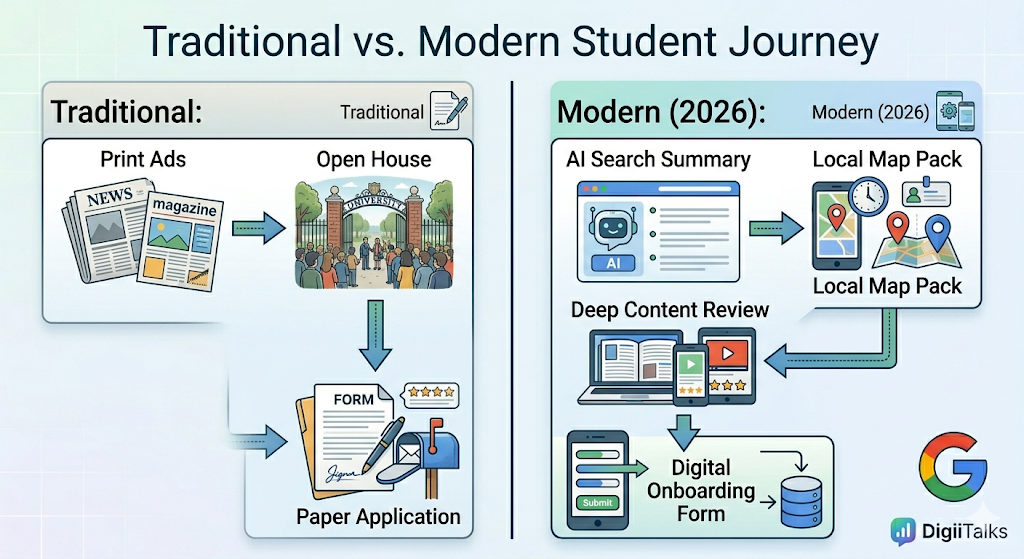
Whether you operate a private K-12 academy, a regional technical institute, or a multi-campus university network, your web presence is your digital shopfront. If your platform is not visible in the first phase of research, you lose market share to the more visible competition. You align your institutional goals with the latest search engine algorithms so that your degree pathways show up at the exact moment a candidate is actively searching for their next academic step.
In-depth Keyword Research for Academic Courses
Analytical keyword research is the first step in a successful search strategy. Many organisations err in focusing solely on broad, highly competitive phrases such as “best college” or “private school.” These terms have massive search traffic but often do not deliver localised or highly intent driven applicants. Instead, an analytical approach seeks long-tail, highly descriptive keywords that align with your specific program offerings.
Our research process analyses user intent patterns in various
academic units We bucketize search queries into distinct intent buckets as follows:
Questions for Information: Users who want general career advice, such as “how to become a data analyst.”
Research Questions: Candidates comparing specific options like “online MBA vs. executive MBA”.
Transactional Queries: “engineering admissions in Delhi 2026” high intent applicants looking for immediate deadlines
We map these specific keyword variations to dedicated landing pages, so we can capture users at each and every step of their evaluation journey. This targeted approach means your content gets seen by your target demographic exactly where they are searching and builds brand trust from the start.
Optimising the strategic site for portals of higher education
In order to make your website work well, you need to find a balance between technical compliance and ease of navigation for users. Large academic websites are often complex in architecture, with thousands of pages across many departments, libraries and student portals. That complexity can confuse search engine crawlers, leading to indexing problems and reduced search performance.
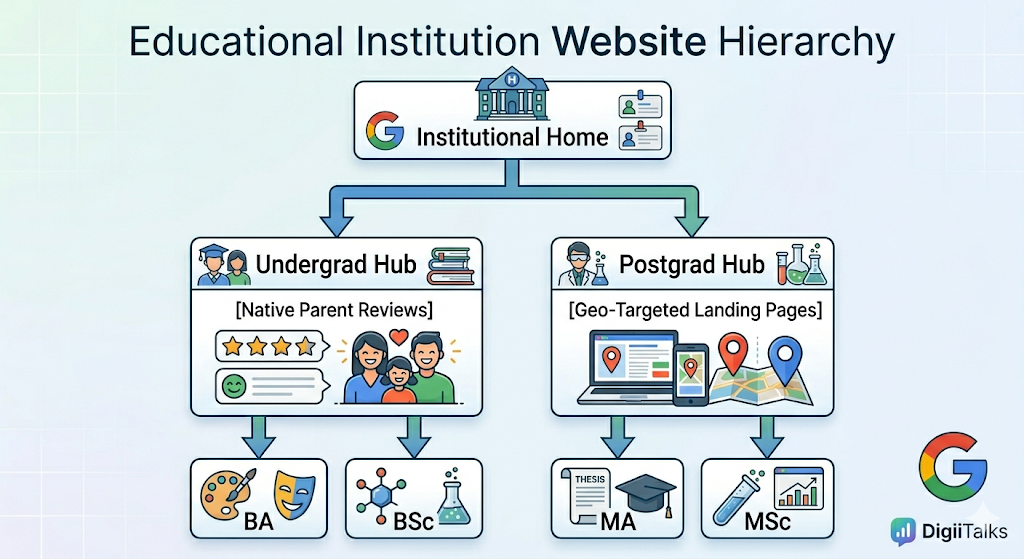
A clean, logical site hierarchy is important for both rankings and user navigation. We create a structured “silo” system, which organises your content by academic discipline. For example, a dedicated URL directory structure for undergraduate courses, postgraduate research tracks and campus life pages. This logical hierarchy helps search engines understand the relationships between your pages, so your core program layouts get the most authority.
Also, as most younger applicants are looking at portfolios on mobile devices, your layout has to be perfectly responsive. Fast loading times, secure HTTPS protocols and easy-to-navigate menus are all important signals that help your platform rank higher in today’s search environments.
The Power of Local SEO for Schools & Academies
If you are a K-12 school, prep academy or regional training center, your core market is limited to a specific geographic area. This localised focus is your most precious asset in the execution of local seo for educational institutions. When a parent searches for “preschools near me” or “best high school in South Mumbai” on a search engine, the search engine prioritises local map listings over regular organic links.
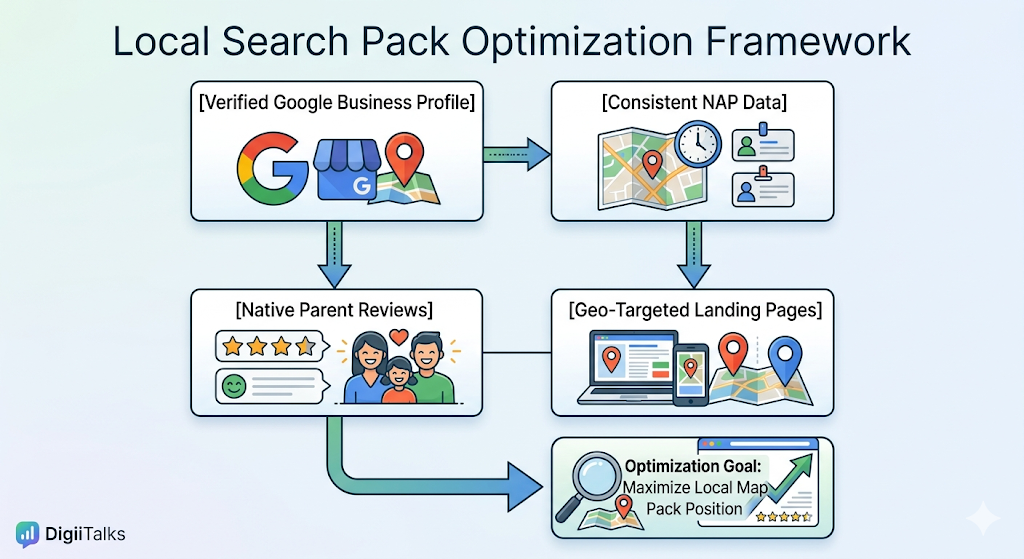
To take over these local search packs, you need to optimise your Google Business Profile meticulously. We make sure your official name, physical address and contact numbers are consistent across all worldwide web directories. We also develop local landing pages that offer neighborhood-specific information, local transit routes and regional community partnerships. A consistent stream of organic reviews from current parents and alumni gives search engines tangible evidence that your institution is a trusted pillar in the local community.
Creative Content Frameworks for Academic Authority
Good content that shows deep first-hand expertise and authoritative insight gets rewarded by search engine algorithms. In the academic space this means taking it beyond basic ad copy to create highly detailed informational guides that truly help applicants. Good seo for education websites means that you treat your portal as a full-fledged educational resource.
Our content strategies focus on building strong informational libraries, including:
Career Mapping Toolkits. Discussing what degree options suit specific career fields.
Admissions Help Guides: Application paperwork and financial aid processes, broken down step by step.
Faculty Research Spotlights: Display of teaching faculty’s academic qualifications and publications.
You build deep topical authority with rich media, detailed faculty profiles, student success stories. This valuable content naturally attracts references from outside websites, establishing your platform as the go-to voice in the education space.
Setting up Trust with Authoritative Link Building
Search algorithms today treat incoming links as online endorsements. Links from very trusted websites to your academic portal send search engines a message that your website is safe, accurate and deserving of top placement. However, a successful link building strategy for colleges and universities has to be focused on quality and relevance and not quantity.
We want to get organic placements on authoritative platforms in the academic field, for example:
Government Education Portals: Getting listed in official state/national board directories
Accredited Industry Associations: Links from professional regulatory groups or research councils e.g
Popular Mainstream News Platforms: Getting media coverage for institutional breakthroughs, research discoveries or community happenings.
And, by beefing up your internal link structure, you’ll make sure this earned authority trickles down to your more in-depth program pages. Strategic internal linking enables search engines to discover new pages quickly, but it also allows users to transition from an informational blog post to an eventual application form with minimal friction.
Student Transitions and Performance Monitoring
Tracking and optimisation are continuous, and a successful digital strategy depends on both. We use full analytics toolkits to monitor search metrics for your website, so we can measure your growth with live data points. The process is based on tracking the movement of your rankings for the main search queries and the gradual increase in the number of your organic visitors to the site.
But, getting organic traffic is just the first milestone and the ultimate measure of success is conversion tracking. We track the entire user journey to see exactly how many web visitors complete key actions, such as downloading a course syllabus, registering for a campus tour, or filling out a digital enrolment form. We help you to lower your total student acquisition costs through continuous optimisation of your page elements, fixing technical mistakes and simplifying your online forms.
1. Organic web visitors (SEO driven)
2. Inbound Leads (Inquiry Form Submitters)
3.Campus Tour Attendees (Warm Leads)
4. Enrolled Students Registered (Final ROI)
How SEO Can Provide Long-Term Value for Colleges
Unlike short-term paid advertising campaigns where visibility stops the moment your budget runs dry, a structured search strategy gives you compounding returns over time. The investment you make today in optimising your code, structuring your internal links and creating great academic guides will continue to attract qualified candidates for years to come. It’s about creating a durable digital asset that gets your brand ahead of the pack.At DigiiTalks we blend technical expertise with a thorough understanding of academic enrolment trends. Behind every data point is a real family wanting to ensure a bright professional future. With a smart plan for seo for colleges, we remove the technical friction between your academic programs and the candidates who need them most. Partner with our team to turn your digital platform into a powerful engine for student recruitment and institutional growth.
FAQs
A targeted search strategy will make sure that your school or university appears at the top of search listings for candidates looking into specific courses. By optimising your website for high intent search terms you can attract qualified visitors who are actively looking to apply and you can generate a steady stream of incoming student leads without having to rely on paid ads.
Most parents are looking for day care centers, prep academies and K-12 schools within a reasonable driving distance. Perfect for local search: Your university will rank at the top of the Google Map Pack for location-based searches, helping local families easily find your campus address, contact details, and reviews.
Many college sites have thousands of individual pages spread across departments. A clean internal linking structure allows search engine crawlers to find hidden content quickly and transfer ranking authority from your homepage to specific, deep level course pages.
Search engine optimisation is a long-term tactic. You may see a little indexation boost within weeks of a technical change, but a full campaign will usually take three to six months to achieve a significant and ongoing lift in competitive first-page visibility.
We track your performance using premium search analytics tools to track the growth of your keyword positions and the volume of organic visitors. Most importantly, we link these metrics to actual user behaviours on your site like downloading a brochure, registering for an event and completing an application form.
In contemporary search contexts, sites lacking in-depth, authoritative content seldom rank well. A steady stream of original, helpful content – admissions tips, program overviews, alumni success stories and the like – is critical to demonstrating your academic expertise to search engines and visitors alike