There is much more to a successful digital storefront than just listing your products and waiting for shoppers to show up. Visibility is everything in the highly competitive e-commerce landscape. Paid ads can drive immediate, short-term traffic spikes, but relying solely on paid acquisition channels will quickly burn through your marketing budgets and squeeze profit margins. To create a sustainable, self-sustaining sales engine, online brands need to secure a prominent position where consumers are actually shopping and researching: the organic search listings.
Optimizing an e-commerce platform is a unique challenge in itself. From managing complex collection hierarchies to fixing messy code from third-party apps, it takes a certain expertise to take a typical digital storefront and make it a powerhouse of organic traffic. In this definitive guide you will learn how to use enterprise level ecommerce seo to remove technical roadblocks, build topical authority and convert casual searchers into lifelong buyers.
Why You Shouldn’t Spend Your Money on Paid Channels
Many e-commerce business owners are tempted to keep funding ongoing ad campaigns in order to keep their transaction volumes up. But as soon as they turn off the ad spend, their customer acquisition goes to zero. A good Shopify SEO agency pulls your brand out of this perpetual dependence, creating a pathway for constant, inexpensive acquisition.
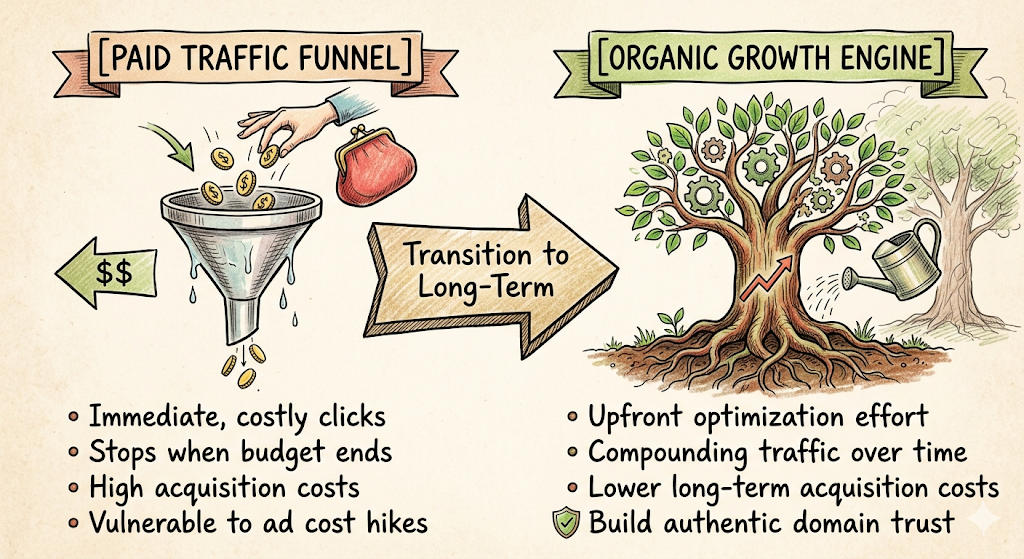
Your product pages are ranking at the top of search engine result pages, capturing high-intent shoppers ready to buy. This steady stream of organic traffic decreases your dependence on paid media, which stabilizes your operating margins and supports predictable business growth.
1. Overcoming the Technical Limitations of E-commerce Frameworks
E-commerce platforms are designed for retail efficiency, but their out-of-the-box configurations can present structural challenges for search engines. Clean site architecture and professional technical intervention is required to crawl and index thousands of product variations.
Controlling Canonicalization and Duplicate Content
Digital storefronts often suffer from duplicate content issues caused by product filtering options. If an item appears in more than one collection, the platform will often generate several different URLs for that one product page.
Search crawlers see these pages as duplicate versions of the same content if the proper canonical tags are not in place. This dilutes your ranking power and confuses search engines. A dedicated seo agency makes sure each product variation is directed to a single authoritative canonical web address, saving your crawl budget and concentrating link equity.
Eliminating Technical Problems and Clean Code Architecture
As online stores grow they often include third-party applications such as product reviews, currency conversions or countdown timers. Over time, these applications leave behind messy, leftover code strings that slow down page load speeds.
To address these underlying technical issues, a thorough audit of the theme file structure is needed. Cleaning up template code, compressing heavy images and setting up lazy-loading scripts ensure your platform loads instantly, creating a smooth experience on all user devices.
2. Architecture Optimization for Enhanced User Experience
Search visibility and user experience go hand in hand. Today’s search logic favors platforms that help visitors find precisely what they want with as little friction or delay as possible.
Constructing Logical Collection Hierarchies
Messy catalog layouts annoy buyers and make crawling difficult for search spiders. Your store should be a simple, straightforward pyramid design so a user can get from general category groups to specific product models in three clicks or less.
Enhanced Internal Linking Architecture
Strategic internal linking funnels ranking power from high authority pages right down to your deeper product listings. Instead of using your primary navigation menu alone, try to find opportunities to create links between pages, for example:
- “Related Products” modules on your product pages.
- Linking to relevant collection pages in your educational blog posts.
- Adding clear breadcrumb paths on all pages to make it easier for users to navigate your store.
A properly structured path guides a search engine crawler through your catalog and makes it easier for buyers to find complementary products, which will improve your conversion rates.
3. Quality Content Marketing for E-commerce Success
E-commerce brands often spend all their optimization energy on product descriptions, ignoring informational searches completely. But delivering relevant content speaks to buyers much earlier in their shopping journey.
Strategic Content Development for Inbound Traffic
Customers, before they decide on a particular brand, are usually looking for general solutions to their problems. A shop that sells leather shoes, for example, could publish articles on topic ideas such as “How to clean and maintain premium leather boots” or “The differences between full-grain and top-grain leather.”
By investing in continuous content creation, you can develop authoritative answers in your product niches. This strategy brings potential buyers to your site well before they are ready to make a purchase.
Inbound Content Marketing to Maximize ROI
Educational material covers search queries that commercial product listings miss. For certain landing layouts, providing downloadable sizing guides, material comparison charts, or expert style lookbooks transforms your platform into a trusted industry hub. This whole content marketing strategy creates trust with potential customers, leading them seamlessly from the first research to the final checkout cart.
4. Off-Page Optimization & Strategic Authority Building
On-page updates are half the battle. In order to rank better than your competitors in the industry, you need to establish authority by acquiring backlinks in an ethical and top-notch manner.
Secure Link Building: The Dynamics
When other platforms link to your site, search engines view them as votes of confidence. But low quality automated directory links can seriously penalize rankings. Secure link building is the process of getting real mentions from real blogs, news sites and partner sites in your industry.
E-Commerce Off-Page Authority Strategies
- Supplier Collaborations – Get your storefront on the official store finder pages of the manufacturers of the products you stock.
- Expert Feature Contributions Get your executive team sharing insights on major retail publications to get authoritative brand links naturally.
- Digital Public Relations: Develop compelling consumer surveys or data-driven industry reports that reporters will naturally want to cite and link to.
Having authoritative links shows search engines that your shop is a trusted source, and can boost your keyword rankings for your whole catalog.
5. Data-Driven Continuous Optimization for Max ROI
A professional optimization plan does not involve guesswork. Instead, it leverages systematic tracking and real-time analysis of user behavior to optimize strategies and maximize returns.
Managing Core Shop Metrics
To truly evaluate the impact of your optimization efforts, your team should measure a handful of key performance indicators:
- Organic Impression Volumetrics: Tracking the frequency of how often your store listings show up on search result pages.
- CTR Differences: How to change your page title tags and meta descriptions to get more clicks from search results.
- Cart Abandonment Tracking: Understanding why users are dropping out of your checkout funnel so you can remove friction and increase conversions.
Your marketing team can then leverage this operational data to zero in on the products, categories and keywords that generate the highest profit margins.
Building Long-Term Sustainable Growth
To be successful in the e-commerce world, you need to be consistently applying multiple layers of strategy. You can turn your store into an organic acquisition engine with a combination of technical fixes, logical navigation setups and valuable content creation.
By partnering with an experienced partner like a professional Shopify SEO agency by DigiiTalks, your brand will be better positioned to navigate platform updates, outrank competitors, and generate profitable, long-term growth.
FAQs
E-commerce platforms have their own code patterns, canonicalization structures and app dependencies that standard web optimization methods do not address. A dedicated agency knows how to fix theme code issues, improve product variants, and properly configure structured data schemas so your whole product line ranks cleanly on the major search networks.
Common issues for online stores include duplicate content from collection filters, slow page load speeds from unoptimized third-party tracking apps, and missing schema markups on product listings. Fixing these deep technical issues makes it easier for search engines to crawl, index and correctly display your product pages to active buyers
The professional Shopify SEO services do not only focus on generating traffic, they will also optimize your entire site layout to improve the user experience. By removing buying friction with clean navigation menus, faster page load times and clear call-to-action buttons, you help convert organic traffic into completed orders.
Yes. Using paid acquisition alone puts your brand at the mercy of rising ad costs and unpredictable drops in margins. Excellent blog guides, product comparison charts, and expert lookbooks help you capture non-commercial, informational search queries, building up a reliable stream of organic traffic to support your overall ad spend.
Organic search strategies are meant for long term sustainable growth rather than overnight spikes. There are technical fixes and meta tag updates that can improve rankings in a few weeks initially. A complete campaign with link building and content creation typically takes three to six months before you see meaningful increases in organic traffic.
Search engines treat links from other authoritative sites as votes of confidence in your brand’s credibility. In a very competitive retail niche, strong backlinking can help you stand out from the pack of competitors, increase your domain authority and boost rankings for difficult, high volume search terms